From Steps to Stories: The Magic of Expressive Movement
At Tutu School, dance is a language.
Before children can explain how they feel or who they are, they use their bodies to communicate. They stomp, curl, stretch, pause, and burst into motion. These movements are early expressions of emotion, imagination, and identity.
Expression and storytelling give children a way to shape those instincts into meaning. That is why this milestone matters so deeply in our classrooms.
Movement Is an Emotional Language
Children experience emotion in their whole bodies. Excitement feels big and fast. Calm feels slow and grounded. Worry might feel small or still.
When children are invited to explore feelings through movement, they learn that emotions can be noticed, expressed, and changed. Expressive movement gives children a safe, playful way to experience big feelings without needing the right words.
Rather than asking children to perform an emotion, we invite them to experience it through movement.
Imagination Turns Movement Into Story
Imaginative play is how children make sense of the world.
When a child moves like a fairy, a villain, or a hero, they are exploring perspective and emotion. A soft gesture can suggest kindness. A strong step can suggest bravery. A dramatic pause can suggest anticipation.
Through storytelling through movement, children learn that how they move becomes part of the story they are telling.
What This Looks Like in Class
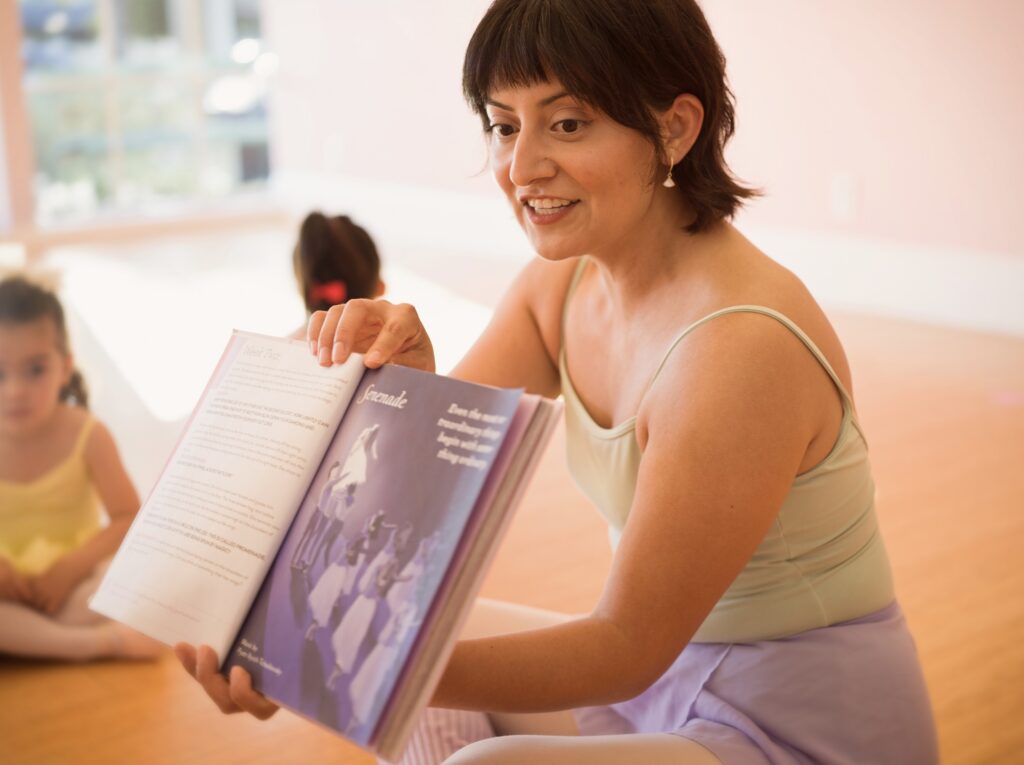
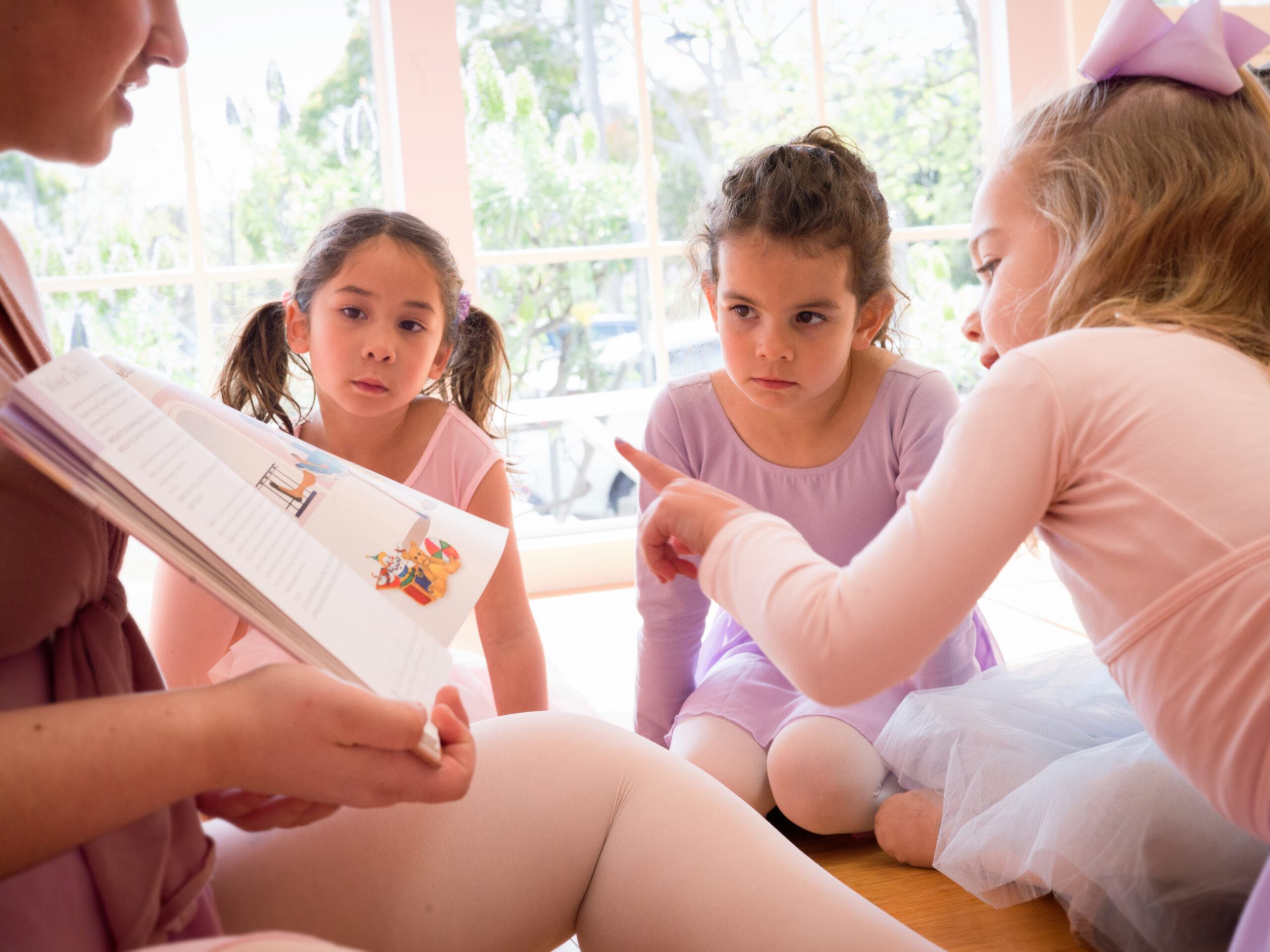
In class, storytelling comes to life through guided movement and imagination. Children experiment with facial expression, arms, posture, and energy to discover how movement changes when feelings change. There is no single right way. Curiosity and exploration are encouraged.

Expression Builds Confidence and Connection
As children grow, expressive movement becomes more intentional. They begin to realize that their choices matter. How they move shapes what others understand.
This awareness builds confidence, emotional understanding, and a sense of ownership over movement. Children learn, “My movement means something,” and “I can share how I feel.”
Music supports this process by shaping emotion and guiding movement quality. Children learn to respond thoughtfully to what they hear, deepening both artistic expression and self-regulation.
Why This Matters Beyond Dance
The ability to express emotion, imagine different perspectives, and communicate without words supports children in every part of life.
Through expressive movement, children build empathy, emotional resilience, and confidence in their bodies. These skills support friendships, learning, and self-expression far beyond the studio.
Expression at the Heart of Tutu School
Expression and storytelling give dance its purpose.
As children grow, steps become tools for communication. Music becomes a partner. Movement becomes a way to share stories, explore feelings, and connect with others.
Because children do not just want to move. They want their movement to mean something.
otras entradas que le pueden interesar


Boletín