The Power of Make-Believe: Why Imagination (and Dress-Up!) Matters in Childhood
There is something remarkable about watching a child become.
A story they experience ends, and suddenly the living room is a castle. A scarf is a cape. A cardboard tube is a telescope. A pair of sparkly shoes transforms their wearer into a princess, a fairy, or a character from a story they aren’t quite ready to leave behind.
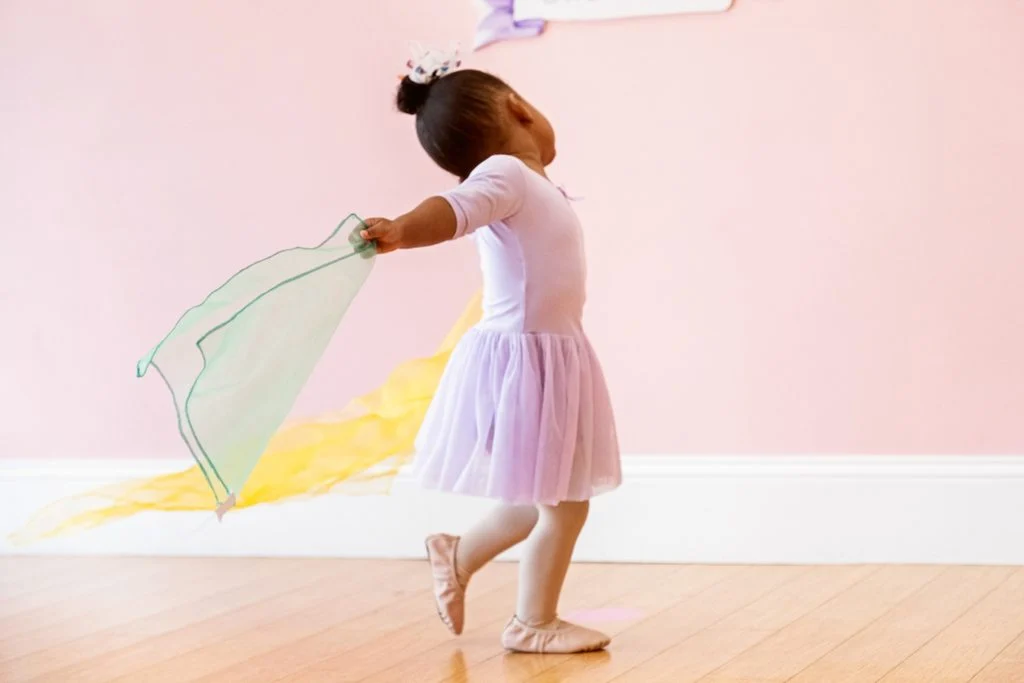
I see this kind of transformation in my own home all the time. One of my children will finish a movie or story and almost immediately begin rummaging through drawers and closets, carefully assembling pieces to create a costume from whatever he can find. The details matter. He isn’t simply putting on clothes—he’s becoming the character, stepping into the story, and carrying it with him into his play.
And while it can look like simple childhood fun from the outside, there is actually some pretty remarkable developmental work happening underneath all that make-believe.
Play is serious childhood business
The American Academy of Pediatrics calls play an important part of healthy childhood development, supporting social-emotional, cognitive, language, self-regulation, and executive-function skills. Pretend play in particular asks children to hold ideas in their minds, take on roles, solve problems, communicate, and navigate imaginary situations.
Harvard Center on Developing Child similarly points to imaginary play as an age-appropriate way for young children to practice executive-function skills. When children take on a role, they have to remember what that role involves and adjust their actions accordingly. When they repurpose familiar objects as part of their imaginary world, they’re practicing the kind of flexible thinking that is such an important part of learning and stories add another layer.
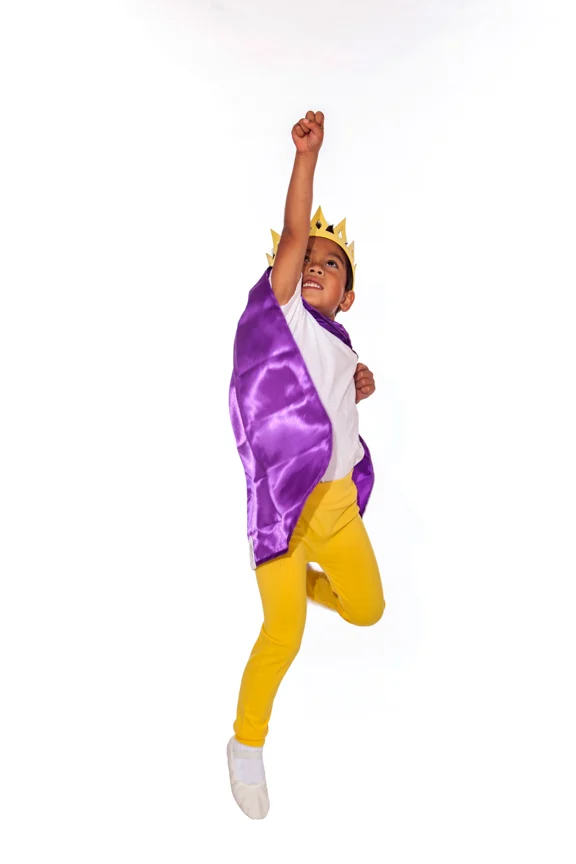
Through dramatic play, children can experiment with characters, narratives, language, and different perspectives. The National Association for the Education of Young Children (NAEYC) notes that this kind of play creates opportunities for children to expand vocabulary, practice storytelling, negotiate with others, take another person’s perspective, and practice empathy and cooperation.
In other words, when a child says, I’m Cinderella now, quite a lot may be happening.
Stories give children somewhere to practice being human
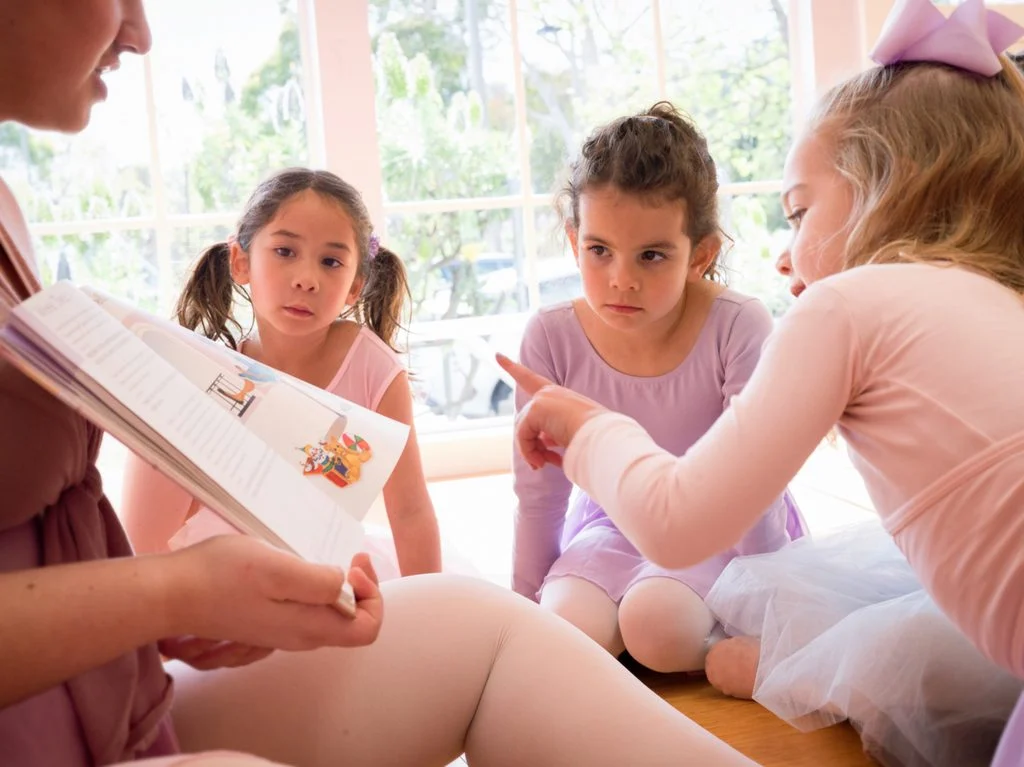
This is one of the reasons storytelling is such an important part of what we do at Tutu School North Raleigh.
Through Ballet Storytime, our dancers aren’t simply introduced to the music, characters, and plots of famous classical ballets. They’re invited to wonder about them.
How do you think Cinderella feels when she’s told she can’t go to the ball?
What might it feel like to arrive at a wonderful celebration?
What does bravery look like?
How would you move if you were as light as the autumn wind?
Questions like these ask a child to recognize an emotion, imagine someone else’s experience, translate that feeling into movement, and then embody it.
Sadness might become a drooping head and heavy arms. Excitement might send a dancer leaping across the room. Pride can make a body grow taller. A brave character might inspire strong, confident movement.
There is no single “right” answer. That’s part of the magic.
Children are learning that movement can communicate something—that a body can help tell a story. And along the way, they’re getting opportunities to name feelings, imagine another perspective, make creative choices, and express an idea without needing all the words for it yet.
At Tutu School, imagination gets moving
The same philosophy shows up in the way we introduce ballet movement itself.
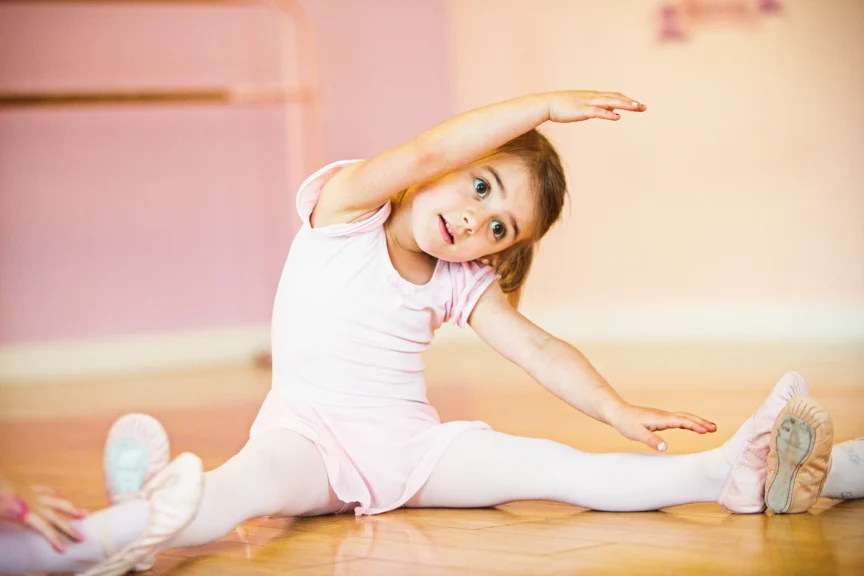
A straddle stretch can become an invitation to paint a rainbow from one pointed toe all the way to the other.
A plié becomes a rocket ship crouching low on its launchpad before blasting into the sky.
A jump can send a dancer high enough to catch a star—or maybe even the moon.
Children might flutter like butterflies, grow like flowers, tiptoe through an enchanted forest, or move through the room like the wind.
But underneath the rainbow, rocket ship, and fairy wings, something very real is happening.
Little bodies are stretching. They’re bending and jumping. They’re balancing, coordinating, listening to music, following sequences, navigating space, practicing ballet vocabulary, and beginning to experience the fundamental ways ballet asks a body to move.
The imagination isn’t there instead of ballet. It is part of how we introduce ballet.
That’s an important distinction.
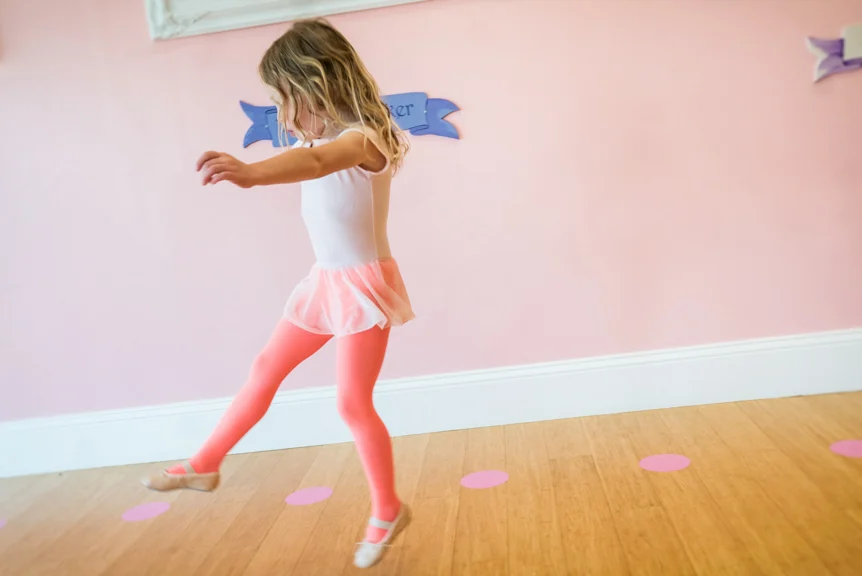
There will be plenty of time in a dancer’s life for longer exercises at the barre, dress codes, increasingly detailed technical corrections, and the discipline that comes with more advanced ballet training. Watching a young dancer become ready for those next steps—and gain confidence and pride in their growing technique—is wonderful.
But early childhood doesn’t need to be rushed in order for the learning happening within it to be meaningful.
In fact, the American Academy of Pediatrics has specifically emphasized the importance of playful learning at a time when early-childhood programs can face pressure to become more early-childhood programs can face pressure to become more focused on formal, adult-directed instruction. Play gives adults opportunities to scaffold foundational motor, language, social-emotional, and self-regulation skills while preserving children’s intrinsic motivation to explore and learn.
At Tutu School, we believe a child’s first experience of ballet can be both real and rigorous in its thoughtfulness, while still being joyful, imaginative, and developmentally appropriate.
They are learning ballet.
They are also still little.
We think there is something very special about honoring both.
Sometimes, what we wear helps us become
And then, of course, there are the costumes.
Dress-up gives all of this imaginative work something wonderfully tangible.
NAEYC describes a costume as a kind of prop that helps a young child communicate the role they’re taking on—to themselves as well as to everyone around them. A scarf can become a superhero’s cape. An upside-down bowl can become a firefighter’s helmet. As children pretend to be someone else, they’re experimenting with what it feels like to take on another role or perspective.
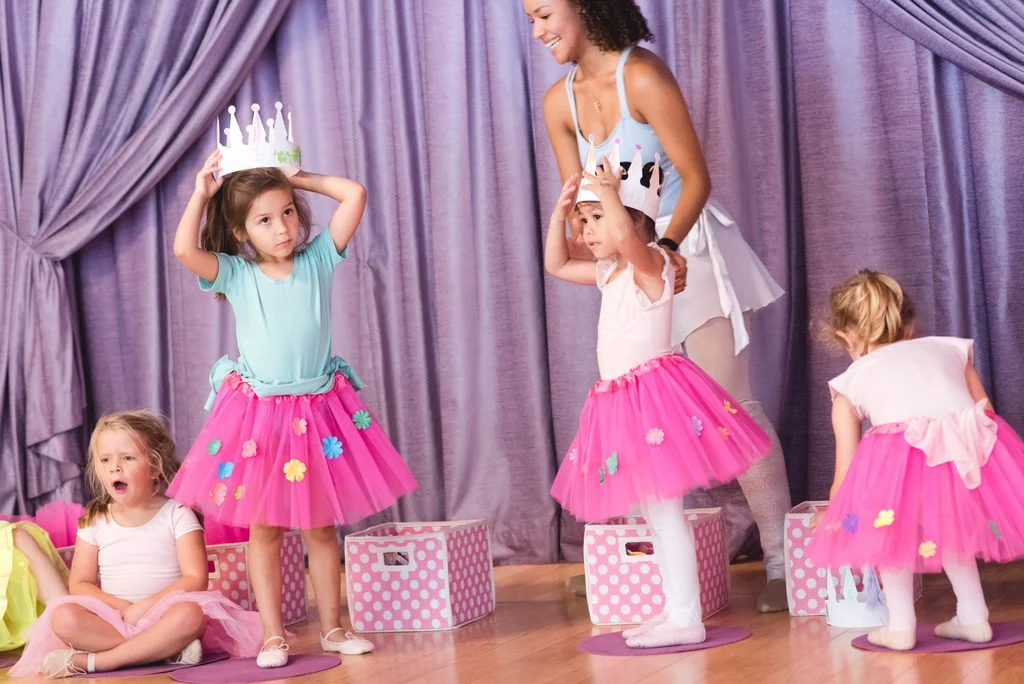
Anyone who has watched a child put on a beloved costume has probably seen the transformation happen almost instantly.
The cape goes on, and suddenly they stand differently.
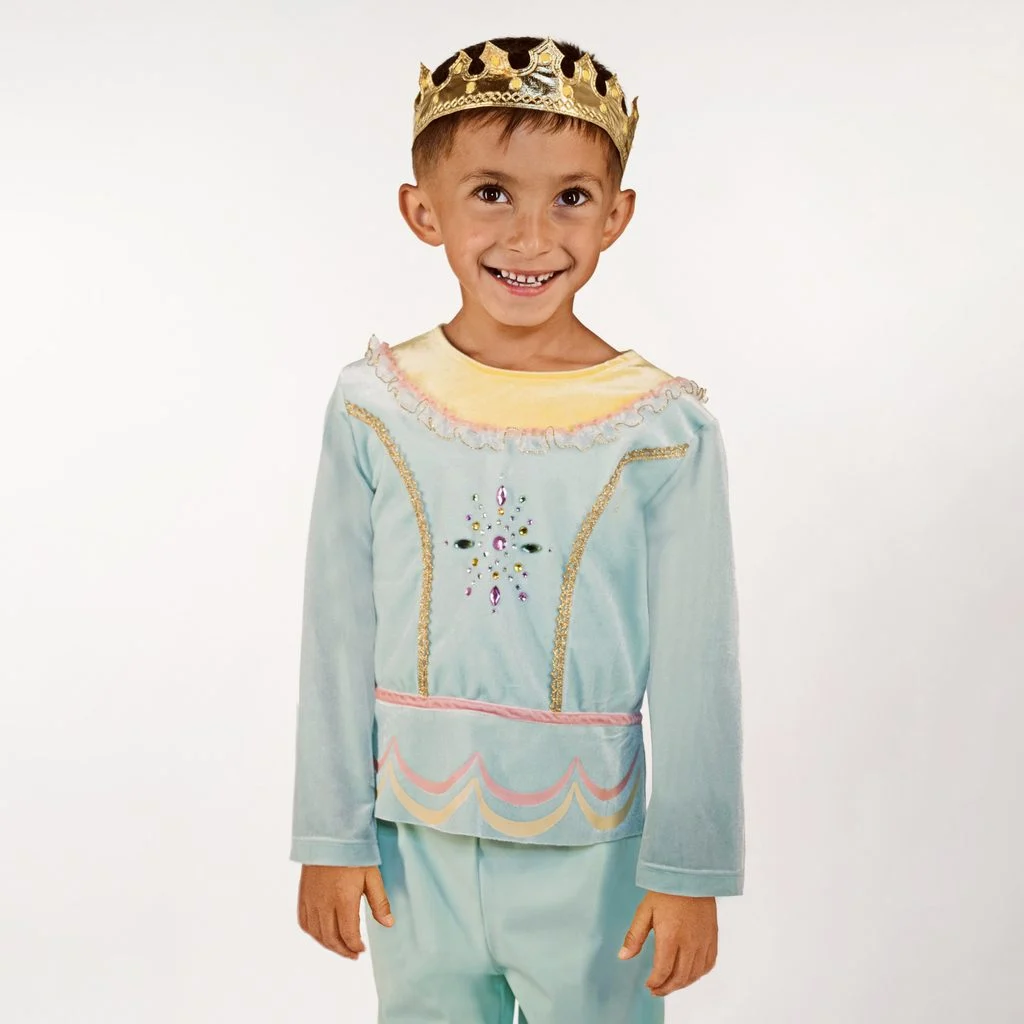
The crown is placed just so, and there is a queen in the room.
The tutu is pulled up, and the living room becomes a stage.
The costume doesn’t create the imagination—the child already brought that.
It simply gives the imagination something tangible to hold onto.
Maybe that’s part of what makes choosing a Halloween costume feel like such an important childhood decision. For one day, a child isn’t only deciding what to wear.
They’re deciding who they want to be.
A little extra make-believe this October
That’s one reason we’re especially excited for Costume Week at Tutu School, October 25–31, when our dancers are invited to bring a little extra make-believe into the studio and wear their Halloween costumes to ballet.
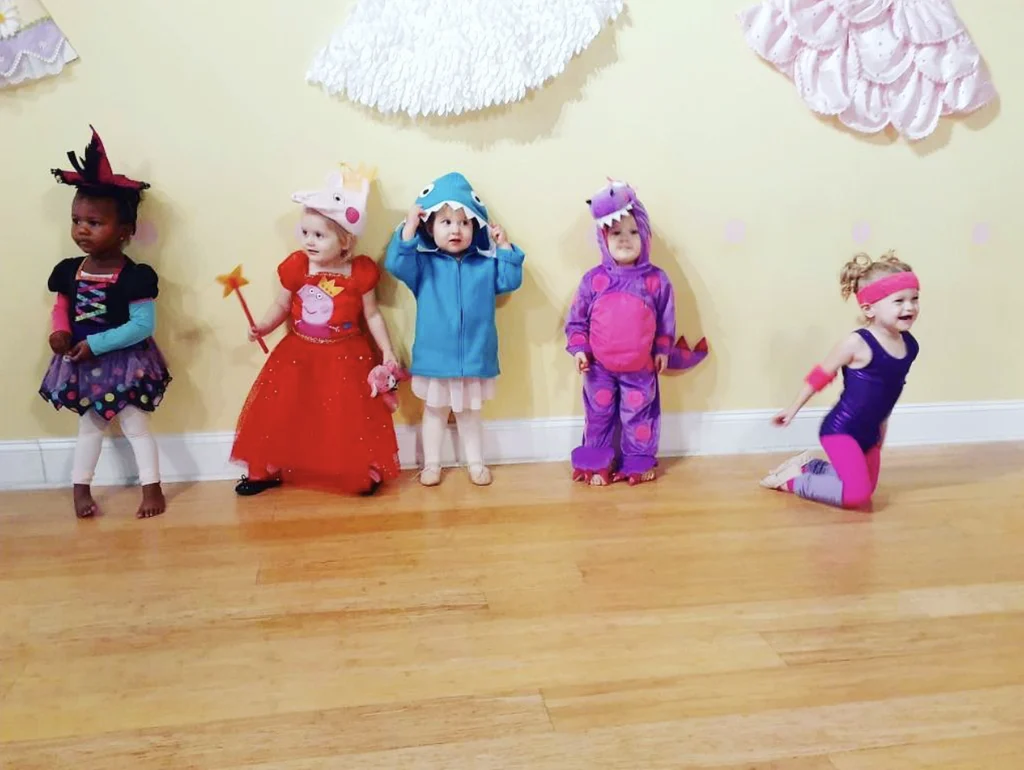
We can’t wait to see our studios filled with princesses, superheroes, animals, storybook characters, fairies, and whatever else our dancers dream up—and to let some Halloween fun find its way into class, too.
But costumes are also on our minds for another reason this season.
We’ve just revealed the costume our dancers will wear for this year’s Land of Sweets–themed Winter Bravo Bash recital: a beautiful mint-green tutu inspired by the magical world of the Sugar Plum Fairy.
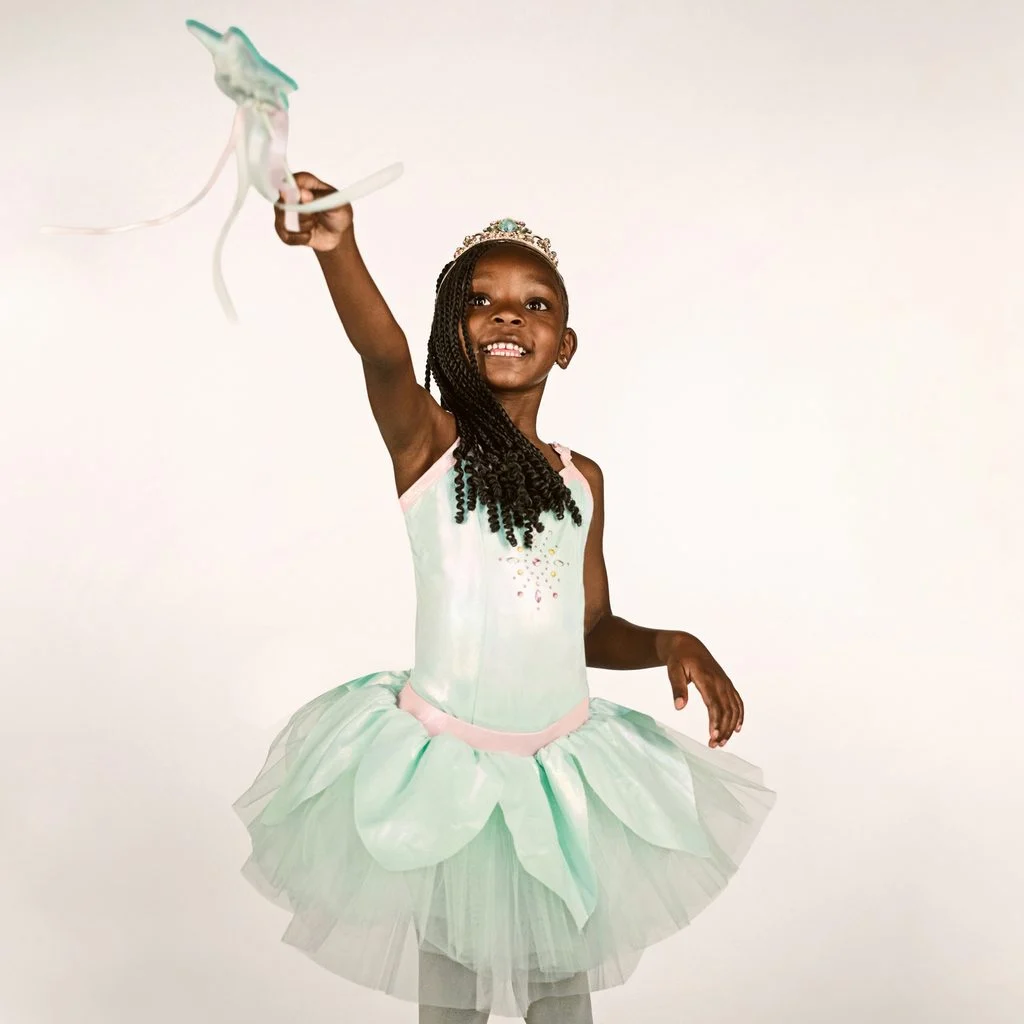
And perhaps that’s the perfect example of where all these ideas come together.
Long before our dancers step onto the stage in costume, they will have listened to music. Heard stories. Learned choreography. Practiced steps. Imagined characters. Moved alongside their classmates. Repeated things that were once unfamiliar until they began to feel familiar in their bodies.
Then comes the costume.
Suddenly, something they have been imagining becomes tangible.
For a few magical minutes onstage, they’re not simply children wearing beautiful tutus. They’re part of the story they’ve been learning to tell.
There is substance underneath the sparkle
At Tutu School North Raleigh, we talk a lot about magic.
We believe in enchanted forests and fairy wings. We paint imaginary rainbows with our pointed toes. We blast off like rocket ships. We tell stories about swans and princesses and courageous characters. And yes, we really, really love a beautiful tutu.
But the magic isn’t there to disguise the learning.
The magic is part of the learning.
The rainbows, rocket ships, stories, music, make-believe, and costumes are all part of a thoughtful approach to meeting young children where they are—and inviting them into the world of ballet in a language childhood already understands.
Because before a child needs ballet to feel disciplined or serious, we believe they should have the chance to discover that it can feel joyful.
That music can make them want to move.
That stories can live inside their bodies.
That they are capable of expressing something beautiful.
And, every once in a while, putting on a tutu really can make you feel like the Sugar Plum Fairy.
otras entradas que le pueden interesar


Boletín